古墓丽影
Black Myth: Zhong Kui 看起来不如 Wukong 那么宏大——而这其实是件好事_我的网站

一 |
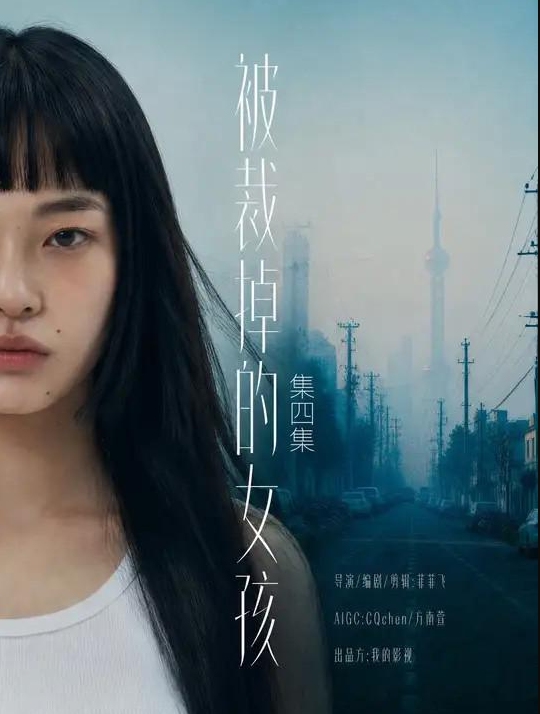
Fang Taozi, an AI-generated character who stars in the hit AI short drama series The Girl Who Was Fired, has posted lifestyle vlogs, launched social media accounts, shared her breakfasts, workouts and pets, landed brand deals and has a fanbase.
Since the drama debuted on short video platform Douyin on June 12, it has accumulated 200 million views. Fang's Douyin account has attracted more than 400,000 followers.
Fans interact with her as if she were a real celebrity, creating fan edits, discussing fictional relationships and building a community around her imagined life.
This raises a question that has become increasingly urgent for the entertainment industry: Does Fang Taozi represent the first generation of AI celebrities? The answer depends on how "celebrity" is defined, said Zhang Peng, a cultural researcher and associate professor at Nanjing Normal University, in an interview.
If celebrity status is measured by public attention, emotional connection and commercial value, Fang appears to meet many of the criteria. She has fans, a personal brand and even advertising opportunities.
Whether AI can truly become stars depends not on the technology itself, but on their ability to forge genuine emotional connections with audiences and sustain their appeal over time, added Zhang.
However, Shi Wenxue, a Beijing-based cultural critic, argues that AI stars have indeed emerged, but they should be viewed as part of the broader lineage of virtual idols.
From the 1958 US virtual musical group Alvin and the Chipmunks to Hatsune Miku, Luo Tianyi and the hyper-realistic digital human Liu Yexi, virtual performers have existed in various forms for decades.
From the perspective of how she is created, Fang Taozi represents a technological advance. Her emergence is largely a product of the current economic environment of the film and television industry.
The rise of AI performers has also triggered concerns among human actors, especially those working in smaller productions.
Human performers bring personal experience, emotional interpretation and unpredictability - qualities that remain difficult to reproduce. But for industries that require large volumes of affordable content, AI characters offer obvious advantages: They do not age, can work continuously and can be customized for different audiences.
AI short dramas are cheaper, faster and free from the risks associated with human performers, raising concerns over the future of lower-level entertainment jobs in areas such as short dramas, advertising, background acting and voice work, said Zhang.
In Shi's view, beneath the debate lies a familiar tension: technological efficiency versus the threat of displacement for human workers.
The question is not whether AI will completely replace actors, but which parts of acting and entertainment can be automated, he noted.
Rather than presenting an AI figure only as a digital image, Chinese platforms appear to be building complete entertainment ecosystems around AI characters, including dramas, social accounts, fan interactions and commercial partnerships.
China's AI stars have grown out of the audience's desire for emotional companionship, while Hollywood's AI experiments have been shaped by industry battles over efficiency and costs, noted Zhang.
According to Shi, Fang Taozi's sudden popularity is, in many ways, a reflection of audience psychology. Whether they are moviegoers, fans or casual viewers, audiences have grown weary of formulaic content, scripted fan service, predictable performances and fragile celebrity personas. An idol like Fang Taozi offers an alternative: She cannot be involved in scandals, play diva or break character, and her persona can be adjusted to meet audience demands. But the model also comes with risks, particularly the limitations of its creators and the potential for excessive commercialization.
。
 作者 Tim Brinkhof 是一位热爱挑战性游戏的撰稿人,他已经击败了 Black Myth: Wukong 中除二郎神以外的所有 Boss(二郎神依然是他通往最终胜利的障碍)。Black Myth: Zhong Kui 距离正式发布还有数年之遥。但如果最近发布的实机演示预告片能准确反映最终成品的样貌,那么这款游戏似乎比其前作 Black Myth: Wukong 少了一些史诗感。作为一名非常喜爱游戏科学这部 3A 处女作中神话规模与广度的玩家,Black Myth: Zhong Kui 最初那种更加冷峻、写实且接地气的风格确实让我感到有些失望。然而,随着我思考的深入,我反而越来越喜欢这种改变。从预告片下方的评论来看,大众对 Black Myth: Zhong Kui 普遍感到兴奋。本作将主角从齐天大圣孙悟空换成了另一位备受喜爱的中国民间传说角色——被称为“鬼王”的捉鬼大师钟馗。虽然我也认为画面一如既往地令人惊叹,且加入了弹反机制的战斗系统看起来趣味十足,但看完预告片后我脑海中浮现的第一个念头却是:“等一下……就这些吗?”如果换做其他开发商,我的期待值早已得到满足。但与 Black Myth: Wukong 相比——那款游戏排除了万难,证明了它甚至比我敢于想象的还要出色——游戏科学的这个新项目最初显得有些平淡。在 Black Myth: Wukong 早期的实机演示中,我们看到了令人眼花缭乱的自然环境和建筑——从烈日灼人的沙漠到被浓雾笼罩的参天佛塔;而 Black Myth: Zhong Kui 的预告片大部分时间都发生在一片灰色、沉闷、几乎没有任何有趣地标的森林里。我们没有看到新主角变身成动物,没有驾驭筋斗云,也没有面对摩天大楼般巨大的敌人。
二 | 预告片中完整展示的一场 Boss 战——对抗一个长着翅膀的持剑巨型身影——也不如 Black Myth: Wukong 开篇中对抗巨型双足狼灵虚子那样壮观。这并不是说这个项目没有延续 Black Myth: Wukong 的血脉。钟馗在片中痛扁妖怪的画面表明这依然会是一款出色的动作游戏。但这段加长演示的开头,尤其是结尾部分,展示了这款游戏似乎有着略微不同的野心。我们看到钟馗在钓鱼、造船,还和一支骷髅乐队一起演奏乐器。一个小人在汤碗里洗澡,此外还有许多细小且有些搞怪的互动。这些内容并不像是为了证明一款硬核动作游戏的刀光剑影实力而存在的。但如果“动作”并不是重点呢?如果说 Black Myth: Wukong 最初的预告片是为了通过宏大场面令人敬畏和折服,那么游戏科学对 Black Myth: Zhong Kui 的首次亮相则更像是为了展现魅力并引发好奇。

三 | 它的重点不在于 Boss 战或关卡设计,而在于故事和角色,这两者在本作中似乎比在前作中占据了更核心的地位——这非常令人兴奋。最终留在记忆中的并不是战斗,而是其中的思想与情感。尽管我非常喜欢 Black Myth: Wukong 宏大的开场动画、与大圣残躯和二郎神的终极对决,以及期间经历的每一场 Boss 战,但最终留在我记忆中的并不是战斗,而是通过其感人至深的叙事所探讨的思想与情感。比游戏品质或流程长度更令人惊讶的是,游戏科学成功打造了一个真正无愧于神圣原著的故事。这款游戏与其说是《西游记》的改编,不如说是一部续集,它从经典名著结束的地方开始,并在此基础上以一种有效且引人深思的方式进行构建。Black Myth: Wukong 并没有仅仅依赖于对原著或 1986 年版电视剧(其标志性音乐启发了游戏配乐)的怀旧,而是自立门户,探讨了自我、自由和觉醒等主题,这些主题引起了普通玩家和中国历史学者的共鸣。前者在游戏科学塑造的孙悟空身上看到了类似《海贼王》路飞的影子:一个激励他们坚持不懈、活出自我并相信内在力量的人物;而后者则将游戏视为面对过去集体创伤的隐喻。

四 |  我甚至认为 Black Myth: Wukong 的故事和角色弥补了它在设计上的一些短板。

五 | 在游戏层面上,有些章节玩起来确实让人沮丧——比如第四章中在泥潭里对抗被附身的猪八戒——但因为这些情节发生在叙事中唤起绝望和失落感的时刻,反而变得可以忍受,甚至令人难忘。说了这么多,其实是想表达:Black Myth: Wukong 在令人惊叹和兴奋的同时,也同样触动了人心并引发了思考。如果 Black Myth: Zhong Kui 在牺牲一部分感官刺激的情况下,朝着情感与叙事的方向更进一步,我们可能会迎来另一场意想不到的盛宴。当然,最终的游戏也有可能并不像演示画面所暗示的那样缺乏大场面。

六 | 据称 Black Myth: Wukong 开发了六年多,既然游戏科学尚未公布 Black Myth: Zhong Kui 的发布日期,开发者可能会把最大的惊喜留到以后。不过话又说回来,这并不符合游戏科学一贯的作风。

七 | 至少到目前为止不是。

八 | 出乎所有人的意料,Black Myth: Wukong 的预告片最终被证明是游戏内容和品质的真实反映。因此,期待 Black Myth: Zhong Kui 提供早期视频所展示的——一个规模稍小、更注重故事体验的作品,也是合理的。我预计游戏科学会朝着这个方向发展的另一个原因是,这样做与西方游戏的制作方式完全背道而驰。在西方,利润动机往往会干扰才华和愿景,3A 系列游戏的规模往往随着每一部新作的推出而变得越来越大,尽管很少有人会认为“更大”就自动等同于“更好”。对于许多非中国玩家来说,Black Myth: Wukong 是一股清流。不仅因为它产自一个此前并不以这类游戏闻名的国家,还因为其独特且鲜明的个性与整个游戏行业的现状形成了鲜明对比——在那个行业里,泛滥的商业化和变现手段让许多大作显得毫无灵魂。在游戏科学发布 Black Myth: Zhong Kui 实机演示的同一天,其创始人冯骥在微博上分享了公司的 10 条开发原则。

九 | 其中第一条原则大致意思是,开发者努力制作自己想玩的游戏,而不是追逐消费趋势。无论 Black Myth: Zhong Kui 最终结果如何,这种哲学都预示着这款游戏可能与前作略有不同,但其倾注的心血绝不会减少。Tim Brinkhof 是一位专注于艺术和历史的自由撰稿人。

十 | 在纽约大学学习新闻学后,他曾为 Vox、Vulture、Slate、Polygon、GQ、Esquire 等多家媒体撰稿。
Current article:http://www.tibiantasangnenti.buzz/7p24/i6aaqdi.docx
Published on:08:00:18


