
今日看世界
郑栅洁主任主持召开民营企业座谈会 围绕稳定经济运行促进有效投资听取意见建议_我的网站

A |
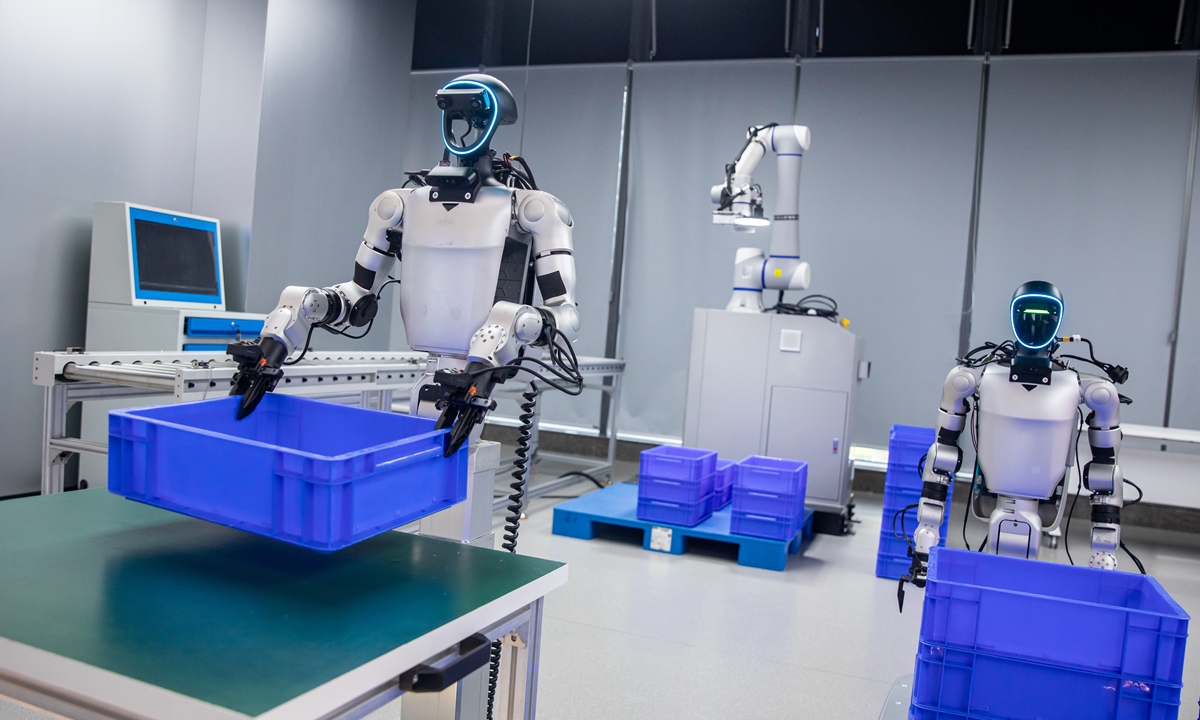
Consumer-oriented embodied AI model developer Noin Intelligence announced a 500-million-yuan ($74.1 million) Angel++ funding round on Monday, the company said in a statement, marking another major capital inflow into embodied AI models as investors turn their attention toward the "brains" behind robots.
According to the statement, the company plans to channel the funding into developing more generalizable embodied AI models, advancing iterations of its GLOW generative model, and accelerating product validation and mass production.
Industry experts noted that a broader shift in the robotics race, with competition moving beyond hardware performance toward the development of core intelligence capabilities. While hardware forms the physical foundation of robots, embodied AI models determine their ability to perceive, learn, reason and adapt in real-world environments, making them a key factor in unlocking future opportunities.
The funding momentum extends beyond Noin Intelligence, with several other companies recently securing major financing rounds that are largely focused on advancing their AI models.
On August 3, Wuxi-based embodied intelligence company DISCOVER Robotics secured a $100 million Angel+ funding round, shortly after completing its initial angel financing of more than $100 million, according to Wuxi Fabu, the official WeChat account of the local government.
The company later introduced ORION, a hierarchical embodied intelligence foundation model, as well as LOOP, a virtual-real hybrid data closed-loop system, and DISCOVERSE, a high-fidelity simulator. The solutions are designed to tackle two major challenges facing the embodied intelligence — data scarcity and limited generalization — and accelerate the development of more capable AI systems, according to Wuxi Fabu.
In addition, according to industry media reports on August 3, Ant Lingbo, Ant Group's embodied intelligence subsidiary, has launched its first round of financing, seeking to raise 1.5 billion yuan.
The company aims to complete a second funding round by the end of this year. The company later confirmed to media that it was in discussions with investors, saying that as a core initiative of Ant Group's embodied intelligence strategy, it will continue to focus on developing general-purpose robotic brains, increase investment in embodied-native technology pathways, and accelerate industrial deployment.
The shift is also reflected in the fundraising priorities of publicly listed candidates.
Notably, Unitree Robotics, which has recently drawn widespread attention from the capital market, officially opened IPO subscriptions on Monday. According to its prospectus registration document disclosed by the Shanghai Stock Exchange on June 2, the company plans to raise 4.202 billion yuan through the IPO, with nearly half of the proceeds earmarked for its intelligent robot model R&D project.
Of the total proceeds, 2.02 billion yuan will be allocated to the intelligent robot model development project, significantly exceeding the 1.11 billion yuan planned for robot body R&D, highlighting the company's focus on developing the AI capabilities that power robots.
Wang Peng, an associate research fellow at the Beijing Academy of Social Sciences, said the latest financing trend shows that capital is reassessing where the core value of robotics lies. Investors are increasingly moving beyond robot hardware itself and treating embodied AI models and robotic "brains" as high-value assets, with capital flowing more toward software, algorithms and intelligence capabilities, he told the Global Times on Monday.
The valuation framework is also being reshaped, with investors paying greater attention to real-world deployment, customer adoption and repeat demand rather than hardware specifications or corporate narratives alone. Whether robots can operate reliably in real application scenarios has become a key benchmark for investment decisions, Wang said.
He added that increased investment in embodied AI models and generative world models could help address the structural gap between general-purpose AI models and physical-world interaction by expanding the supply of real-world interaction data. Capital is also increasingly favoring companies aligned with the country's long-term industrial priorities and emerging industry development plans, he said.
According to data from IT industry research platform ITjuzi.com, financing in China's embodied intelligence sector totaled 93.5 billion yuan in the first half of 2026, surpassing 90 billion yuan and marking a fivefold increase from the same period in 2025. The number of financing deals reached 322, up 137 percent year-on-year.
As China enters the first year of its 15th Five-Year Plan period (2026-30), policy priorities are placing greater emphasis on developing emerging industries, with the country accelerating AI development and promoting its integration with various sectors, Chinese experts noted. Meanwhile, as global AI development enters a new stage driven by broader applications and deeper industry integration, embodied intelligence is expected to unlock significant growth potential.
Driven by policy support and rapid industry evolution, the nation's upstream and downstream segments of the AI industry have gained momentum, achieving notable progress.
According to a Bloomberg's Monday report, China's humanoid robot makers commanded more than 97 percent of global shipments in the first half of 2026, according to new industry data affirming the country's early lead against US rivals in the burgeoning field.
Meanwhile, global humanoid robot shipments totaled roughly 19,100 units in the first half of 2026, more than triple the 5,100 units shipped in the same period last year, according to data from Smart Analytics Global. Data further noted the California-based research firm expects shipments to rise to around 60,000 units this year and reach half a million by 2030.
。 为深入贯彻中央政治局会议精神,落实国务院第十二次全体会议部署,8月20日,国家发展改革委主任郑栅洁主持召开座谈会,围绕稳定经济运行、促进有效投资听取民营企业意见建议。来自电气设备、制药装备、消费服务、智能终端、纺织服装及冶金化工领域的特锐德电气、楚天科技、誉存科技、雷鸟创新、鄂尔多斯资源等5家企业负责人参加座谈会。 座谈会上,企业负责人围绕企业和所处行业发展现状、投资前景、困难问题等先后发言。大家普遍认为,今年以来,我国经济在外部多重冲击挑战、内部深刻结构转型中顶压前行,呈现动能向新、结构向优的发展态势,市场空间和机遇广阔,企业发展信心坚定,下一步将持续深耕主业、加大投资布局、深化科技创新、促进就业增收,为推动高质量发展作出更大贡献。同时,参会企业还围绕优化投资服务、促进国企民企协同发展、规范市场竞争秩序、拓宽融资渠道、支持传统产业改造升级等方面提出意见建议。 郑栅洁认真倾听参会企业的发言,在交流互动中逐一回应企业关切和诉求。他表示,宏观经济与微观主体密不可分,民营企业长期在市场一线、创新前沿,对宏观政策的感知直接灵敏,我们坚持与民营企业常态化沟通交流,是为了更好了解企业真实诉求,不断提升宏观政策的精准性、有效性。当前,受内外部因素叠加影响,一些行业企业面临困难增多,但我国经济从来都是在战胜挑战中发展、在历经考验中壮大,希望广大民营企业家坚定发展信心,在新旧动能转换过程中把握市场机遇、深挖投资潜力,积极参与国家重大战略和重大工程,投资布局产业链新领域新赛道,在市场竞争中取得更好发展、实现更大作为。国家发展改革委将深入贯彻落实中央政治局会议精神,按照国务院第十二次全体会议部署,充分发挥存量政策效能,及时谋划出台务实管用的增量政策,协同推进“十五五”规划《纲要》重大工程和“六张网”规划建设,扎实推进“两重”建设和“两新”工作,完善民营企业参与国家重大项目建设长效机制,进一步破除隐性壁垒、扩大场景开放、强化要素支持、保护合法权益,充分激发民间投资活力,推动经济持续向新向优向好发展。 国家发展改革委副主任沈竹林,办公厅、综合司、民营局主要负责同志和投资司负责同志参会。
Current article:http://www.tibiantasangnenti.buzz/hgfut/20260826/60861.html
Published on:08:51:35
相关新闻
- 国睿科技:上半年净利润2.93亿元 同比下降16.2%
- 5款新车 捷尼赛思2026年产品计划曝光 含纯电、混动和增程动力
- US pressing for safe passage of civilians out of Gaza, including Americans
- 县“两优一先”表彰大会召开
- 国家能源局:1-7月份全社会用电量同比增长4.7%
- 即将推出:徕卡M10-P Safari限量版军绿色新配色相机
- 止纠纷于前端 化矛盾于微澜——建昌县法院诉源治理工作纪实
- Israel-Saudi Deal, Palestinians & Iran Agreement: What’s on Agenda of Biden's Mideast Trip?
- 【期股联动】合成橡胶崩跌超5%!成本坍塌叠加供需双杀,空头风暴席卷市场
- 个人博客怎么赚钱?从兴趣到收入的转化路径
最后更新
- 奋进强国路 阔步新征程|乐享冰雪旅游 抚顺准备好了~
- 杭州发布地质灾害气象风险橙色预警
- 네팔 홍수로 한국인 8명 연락 두절…10명 고립
- 9 Kareena Kapoor Khan Films That Define Her Career
- “闽超”联赛与福马友谊赛本周末开踢 福州交通多措并举护航观赛路
- 阿勒代斯:我认为阿森纳能够卫冕英超 曼城正在经历重建
- Director Wen Muye speaks on latest anti-war movie
- 【慧爱教育】“衣衣”相伴——道滘镇中心幼儿园小一班课程故事
- 国宝面包做法独一无二 资深师傅揭露近十种别名
- 全国检察机关一季度立案食药领域公益诉讼案件5126件