冒险岛2
Chinese retirees are turning hard-won time into journeys once confined to maps and documentaries_我的网站

一 | Editor's Note:
With China's population of seniors over 60 surpassing 300 million, ensuring a happy and fulfilling life for all seniors has become a pressing issue for both families and the nation. How can the new generation of seniors in China break away from traditional norms and embrace a different lifestyle, supported by AI technology, multiculturalism and an elder-friendly society?
The series "Old Age, New Trends" explores emerging trends in the silver economy, creative social norms among senior citizens and innovative eldercare services. It examines the opportunities and challenges presented by an aging society, highlighting the diverse lifestyles of seniors and the booming eldercare industry in China. Beneath these new trends lies a reflection of Chinese modernization, which aims to provide more secure systems and dignified lives for its senior population.
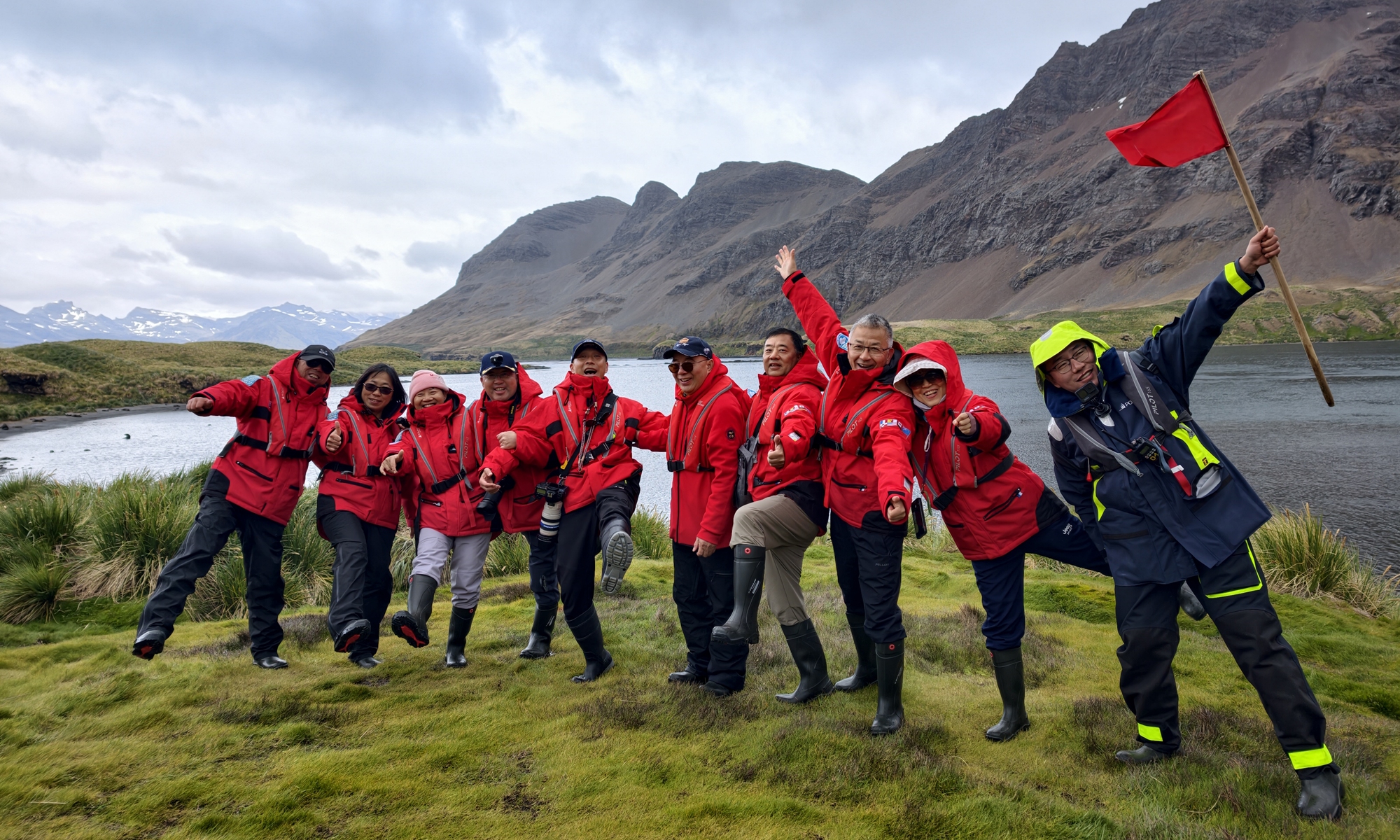
Chinese elderly tourists pose for a photo during a trip to Antarctica. Photo: Courtesy of Zhang XinyuanThe camera moves across ice and water of Greenland before settling on a group of travelers speaking Putonghua. Many are retired. They have come a long way from China to a place that, for much of their working lives, belonged more to maps and documentaries than to any realistic travel plan.
Polar journeys require money, good health and patience for long flights and itineraries that may change with the weather. Yet on ships bound for Antarctica, and tours reaching into the Arctic, retired teachers, doctors, researchers and business managers are becoming easier to find.
After decades scheduled around work and family, they now possess something that was once just as scarce as money: uninterrupted time.
By the end of 2025, China had 323.38 million people aged 60 or above, accounting for 23 percent of its population, according to the Xinhua News Agency. Their incomes, health and family circumstances vary enormously, and polar travelers remain a small, relatively affluent group. Still, their choices bring one change into sharp focus: For some among this new generation of retirees, growing older no longer means simply drawing the boundaries of life inward. It may also be a chance to return to journeys postponed for decades.
Behind every such journey lies a practical calculation: Is the body ready? Is the expense manageable? Can family responsibilities be set aside long enough? The answers are reshaping both travel products and ideas about life after work. At the farthest reaches of the map, some Chinese retirees are asking a new question: With their careers behind them and years still ahead, where do they want to go next?
No longer waitingIn early 2025, 63-year-old He Man stood on a snow-covered slope at Port Charcot in Antarctica and looked back toward the sea.
The Silver Endeavour, the ship that had brought her there, had shrunk to a white speck against the blue water. Penguins wandered nearby. "Standing there, I suddenly realized how small I was - and how small my problems were," she told the Global Times.
It was a journey He Man had postponed for most of her adult life. Before retiring, she was a deputy chief physician at the dental center of Shenzhen People's Hospital in Shenzhen, South China's Guangdong Province. During her 38-year medical career, most days she got up at 6 am, arrived at the hospital around 7 and began seeing patients at 8. On busy days, patients queued up outside her consulting room and she could barely stop for a drink of water.
During the last 20 years of her career, she had no more than 15 days of annual leave each year. Once time was set aside for caring for elderly relatives and looking after her child, what remained was enough only for short trips. She had visited several countries in Europe and North America, but Antarctica remained beyond reach.
"Antarctica had always been a dream, but I never really dared to imagine going," she said. The possibility became real only after friends from university made the journey in 2023 and 2024 and encouraged her to follow. By then, she had retired at 60. More important than anything else, she said, was that her time was finally her own.
In October 2024, she booked a place on an expedition ship carrying about 200 passengers. She went with her husband, a neighboring couple and another couple with whom they often traveled, forming a group of six.
The early-booking cruise fare exceeded 150,000 yuan ($22,250) per person. She and her husband later paid another 40,000 yuan each to upgrade their flights to business class.
"On a journey this long, at our age, we should treat ourselves well," she said. The flights between China and South America alone took more than 30 hours. The entire journey eventually lasted 41 days, combining an 11-day Antarctic cruise with visits to Argentina, Brazil, Peru and Chile. "Since we had flown so far, we wanted to see it all in one go."
The journey began with a lesson in polar uncertainty. To catch a period of calmer weather across the Drake Passage, the ship moved its scheduled departure from noon to 6 am.
The couple reached the port in Chile before dawn after barely sleeping, only to learn that replenishment and repairs had taken longer than expected. The weather window closed, and the captain diverted through the Beagle Channel while waiting two days for conditions to improve.
The retired doctor did not regard the delay as time lost. Marine biologists, ornithologists, geologists and polar historians delivered lectures on board throughout the day, while passengers watched the fjords outside. "There were many older people on the ship. We had time, and nobody was really in a hurry," she said.
When she finally stepped onto the Antarctic snow, she said she was so overwhelmed that she wanted to cry. The trip did not remove the pressures waiting for her at home, but it changed the scale on which she viewed them.
"When I feel stressed or upset now, I think of Antarctica," she said. "Life is only so long. Don't hold yourself too tightly. Let go when you should."

Scenery of Antarctica Photo: Courtesy of Zhang Xinyuan
Beyond one journeyAccording to He Man, people aged 60 or above accounted for more than half of the passengers on board, while Chinese travelers also made up more than half. After returning home, some of the travelers from Shenzhen created a WeChat group, while others had already begun discussing their next destination.
Travel agencies specializing in expedition cruises have noticed the same pattern. Zhang Xinyuan, founder and CEO of Newayer Cruises, told the Global Times that the company entered the Antarctic market in 2008 and sent its first group the following year. It has since served approximately 6,000 travelers on trips to the Arctic and Antarctica.
Among its customers, more than 65 percent are aged over 50, with those between 55 and 65 forming the largest group.
The makeup of that group has changed. Before 2020, Zhang said, most of the agency's polar customers were private business owners, senior executives and their family members. In recent years, the professional backgrounds of its customers have become more varied, with retired teachers, doctors, researchers and managers from public institutions increasingly represented. Retired women traveling alone have also become more visible.
Their journeys do not necessarily end after one polar voyage. Zhang once regarded Antarctica as a once-in-a-lifetime destination, but found that some customers continued on to the Arctic, the Galapagos Islands or wildlife reserves in Africa.
She cited a recently retired couple who booked trips to both Antarctica and the Arctic. While still aboard the Arctic cruise, they asked to reserve places on a southern Africa itinerary planned for the following year.
Industry data suggest that this is a growing, though still expensive, segment of the travel market. During the 2024-25 Antarctic season, Chinese nationals accounted for 10 percent of passengers traveling with operators belonging to the International Association of Antarctica Tour Operators, or IAATO, the second-largest share after the US.
In the 2025-26 season, IAATO operators recorded 85,195 visitors who landed in Antarctica and another 27,217 cruise-only passengers. The association said China had seen the greatest post-pandemic increase among the main sources of Antarctic travelers.
Data released by Tongcheng Travel offer a closer view of the high-end market. From January to September 2025, travelers aged between 50 and 70 accounted for more than 70 percent of users booking outbound luxury cruises on the platform. Among customers purchasing polar cruise products priced above 100,000 yuan, more than 90 percent were classified by the company as silver travelers.
As the customer base changes, the product is changing with it. Zhang said the longest flights, rather than the cruise itself, often present the greatest physical challenge. On board, travelers can decide whether to join shore landings, hikes or Zodiac cruises according to their physical fitness and health condition.
At Newayer Cruises, travelers aged between 75 and 80 are generally asked to provide medical documentation and travel with a family member. Its group products include emergency medical and evacuation insurance, while tour leaders accompany passengers from departure.
The agency has also added Chinese-language services and meals familiar to Chinese passengers, while leaving more space in itineraries rather than packing each day with activities. Flexibility is needed for reasons beyond the traveler's own health.
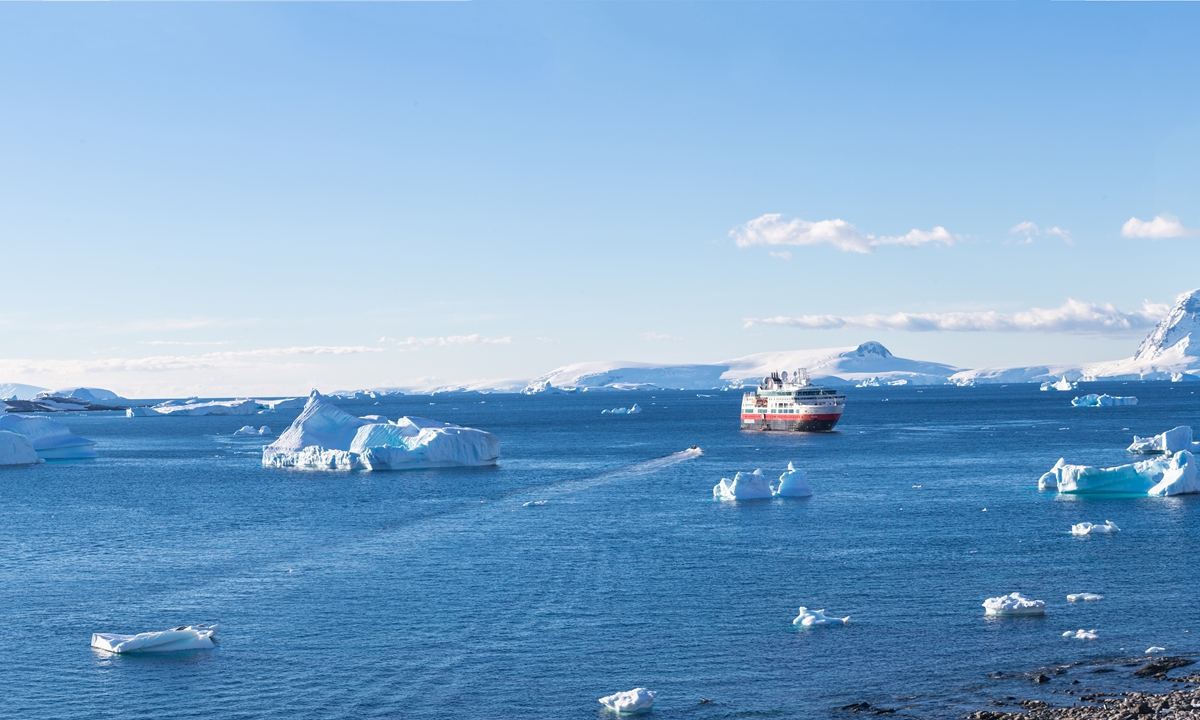
A ship sails among icebergs in Antarctica. Photo: VCG
The Arctic can waitPolar travel occupies the expensive outer edge of a much broader change in how older Chinese people spend their time. By the end of 2025, China had 323.38 million people aged 60 or above, accounting for 23 percent of the population. Those aged 65 or above numbered 223.65 million, or 15.9 percent.
The National Bureau of Statistics noted that people aged between 60 and 64 made up a relatively large part of the older population, and that many were still healthy and participated in social activities.
Travel is becoming one outlet for this age group. Data cited by the National Development and Reform Commission show that older travelers account for more than 20 percent of China's total tourist numbers.
Du Peng, dean of the School of Population and Health and director of the Institute of Gerontology at Renmin University of China, noted in a CCTV interview that more than 20 million people would enter old age each year over the following decade. Compared with earlier generations, he said, many would be better educated, assess their own health more positively and use the internet with greater ease.
Policy is beginning to respond to this more varied picture of old age. A State Council document on developing the silver economy calls for replacing rigid age restrictions on travel with assessments based more closely on health, while expanding travel insurance and strengthening consumer protection.
Still, the retirees boarding polar ships should not be treated as a portrait of all 323 million older Chinese people. They are a relatively small group able to meet three demanding conditions at once: sufficient savings, good health and control over their time.
Therefore, what these polar travelers demonstrate is not that every retirement should become an expensive adventure. Rather, they show that later life is becoming less uniform: rest and care remain essential, but for some people, retirement may also contain study, creative work, new friendships and journeys once postponed by jobs and family obligations.
Back in Shenzhen, He Man now divides her Xiaohongshu (RedNote) posts between dental-health advice and notes from her travels. Antarctica has been crossed off the list, but the list itself continues to grow.
She is considering a trip to see the animal migration in Africa and another to watch the aurora in Iceland. The Arctic is lower down on her list.
The Arctic can wait. This time, the delay is hers to decide.
。

Japanese Prime Minister Sanae Takaichi attended the party leaders debate held at the House of Representatives in the Diet,. Tokyo Japan on July 15, 2026.
Due to concerns about fueling tension with China and South Korea, Japanese Prime Minister Sanae Takaichi is considering refraining from visiting the notorious Yasukuni Shrine, a symbol of Japanese militarism and wartime aggression, to mark the anniversary of Japan's unconditional surrender in World War II (WWII) on Saturday, Japanese media outlet Kyodo quoted sources familiar with the matter as saying on Wednesday.
Chinese experts said even if Takaichi forgoes a visit to the notorious shrine, the potential decision is merely driven by political calculations and diplomatic maneuvering, and could not be interpreted as a shift in her right-wing stance or as a sign of remorse over Japan's wartime aggression.
Such a visit to the shrine by Takaichi, a conservative known for her hawkish foreign policies, would certainly fuel tensions with China and create a rift in relations with South Korea, two countries that suffered under Japan's wartime military atrocities, Kyodo News reported.
Takaichi regularly visited the shrine before, even while serving as a Cabinet minister. But she has not visited the shrine since becoming leader of the ruling Liberal Democratic Party and prime minister in October, according to Kyodo news.
Chief Cabinet Secretary Minoru Kihara said at a press conference on August 7, when asked about a possible visit by Takaichi to the shrine around the anniversary, that "it is a matter for the prime minister to decide appropriately on her own," according to Japan's Jiji Press.
A source close to Takaichi told the Jiji that, "I don't think the prime minister will visit Yasukuni Shrine. It would complicate relations with South Korea."
Japan's Asahi TV reported that Takaichi may forgo the visit because she believes it is necessary to avoid triggering diplomatic tensions with South Korea, as well as with China.
A visit to the notorious shrine by a sitting Japanese prime minister would be a serious political incident, as it would reflect the leader's attitude toward Japan's wartime aggression and broader historical issues. Even if Takaichi chooses not to visit the shrine, it would not signal a retreat from her right-wing stance or a change in her views of Japan's wartime aggression against other countries, Lü Chao, an expert on Korean Peninsula issues at the Liaoning Academy of Social Sciences, told the Global Times. Rather, he said, the decision would largely reflect political calculations and diplomatic maneuvering.
Lü added that Takaichi could still make other symbolic gestures on the anniversary to cater to Japan's right-wing forces, whose support helped propel her to power. Such a move, he said, would underscore that her views of Japan's wartime history remain unchanged and serve as a reminder to neighboring Asian countries to remain vigilant about Japan's political direction.
Reporting on Takaichi's possible decision to forgo a visit to the shrine, South Korean newspaper Chosun Ilbo said on Wednesday that Takaichi had regularly visited the Yasukuni Shrine. "In the Liberal Democratic Party leadership election held in October last year, Takaichi also said that if appointed prime minister, she would visit the Yasukuni Shrine, noting that such visits should not become a diplomatic issue." However, since then, Takaichi has not visited in person and has only dedicated offerings in a private capacity, per the report.
In April, after Takaichi sent a ritual offering to the notorious Yasukuni Shrine, Chinese foreign ministry spokesperson Guo Jiakun said that China firmly opposes and strongly condemns Japan's latest negative moves related to Yasukuni Shrine and has lodged strong representations and protests with the Japanese side.
The Yasukuni Shrine is a spiritual tool and symbol of Japanese militarists responsible for the war of aggression. It is in fact a shrine for war criminals, noted Guo.
No sitting prime minister has gone to Yasukuni since Japan's late leader Shinzo Abe did so in 2013, drawing strong criticism from neighboring Asian countries.
Beyond Takaichi herself, some Japanese politicians and lawmakers have kept visiting the Yasukuni Shrine, triggering fierce pushback from peace advocates in Japan and the international community, Liu Jiangyong, a professor at the Institute of International Studies of Tsinghua University, told the Global Times, noting that such visits not only reflect the long-standing right-wing stance of Takaichi and other conservative politicians on historical issues, but also lay bare Japan's enduring militarist remnants.
Also in April, members of the conservative solidarity association, a group of conservatives in Japan's Liberal Democratic Party, and 166 Sanseito lawmakers from the Diet and local assemblies visited the Yasukuni war shrine.
In response, Lin Jian, Chinese foreign ministry spokesperson said that China strongly deplores and condemns such acts.
"By visiting the Yasukuni war shrine that honors Japanese Class-A war criminals year after year, these Japanese politicians seek to reverse the just verdict on Japanese aggression, and hereby whitewash Japan's war crimes and revive militarism. The Chinese people and people elsewhere who suffered under Japanese aggression will never accept that, neither will anyone in the world who stand for peace. As Japanese neo-militarism keeps gaining strength, the international community must stay on high alert and stand ready to stamp it out before it could wreak havoc in the region," said Lin.
。
Current article:http://www.tibiantasangnenti.buzz/list_34irbch/q224o.pptx
Published on:08:34:04