
帝都
China's J-16 fighter crosses swords with Egypt's Rafale jet in first flight day of joint drill_我的网站

A |
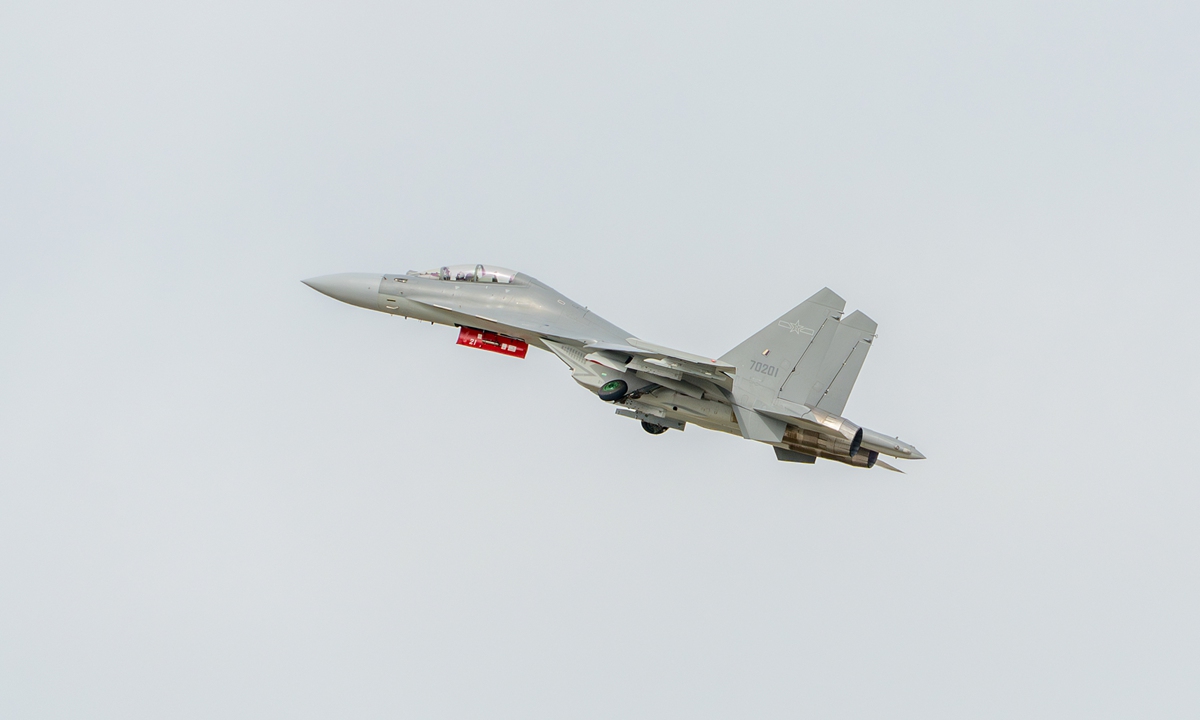
The first day's training focused on one-on-one air combat between different aircraft types. As fighters from both air forces took off in succession, pilots engaged in intense confrontations under realistic combat scenarios, the CCTV News military channel reported.
Before the flight training, Chinese and Egyptian pilots delivered briefings on their respective aircraft capabilities. The two sides then held in-depth discussions on the exercise subjects, clarifying flight safety rules, airspace regulations, takeoff and landing procedures and emergency response plans, said the report.
"The China-Egypt joint air training is progressing from basic one-on-one and two-on-two air combat to more systematic joint operations. As mutual understanding between pilots grows, they can more effectively exchange tactical concepts and operational techniques, which helps enhance the technical and tactical proficiency of both sides," Shen Hao, a member of a PLA Air Force unit, was quoted as saying by the PLA Air Force in a press release on Monday.
Egypt's Ministry of Defense spokesperson posted on social media platform X on Saturday that the joint training between China and Egypt had commenced, releasing images of the participating aircraft - Egypt's MiG-29 and Rafale fighters, and China's J-16 fighter.
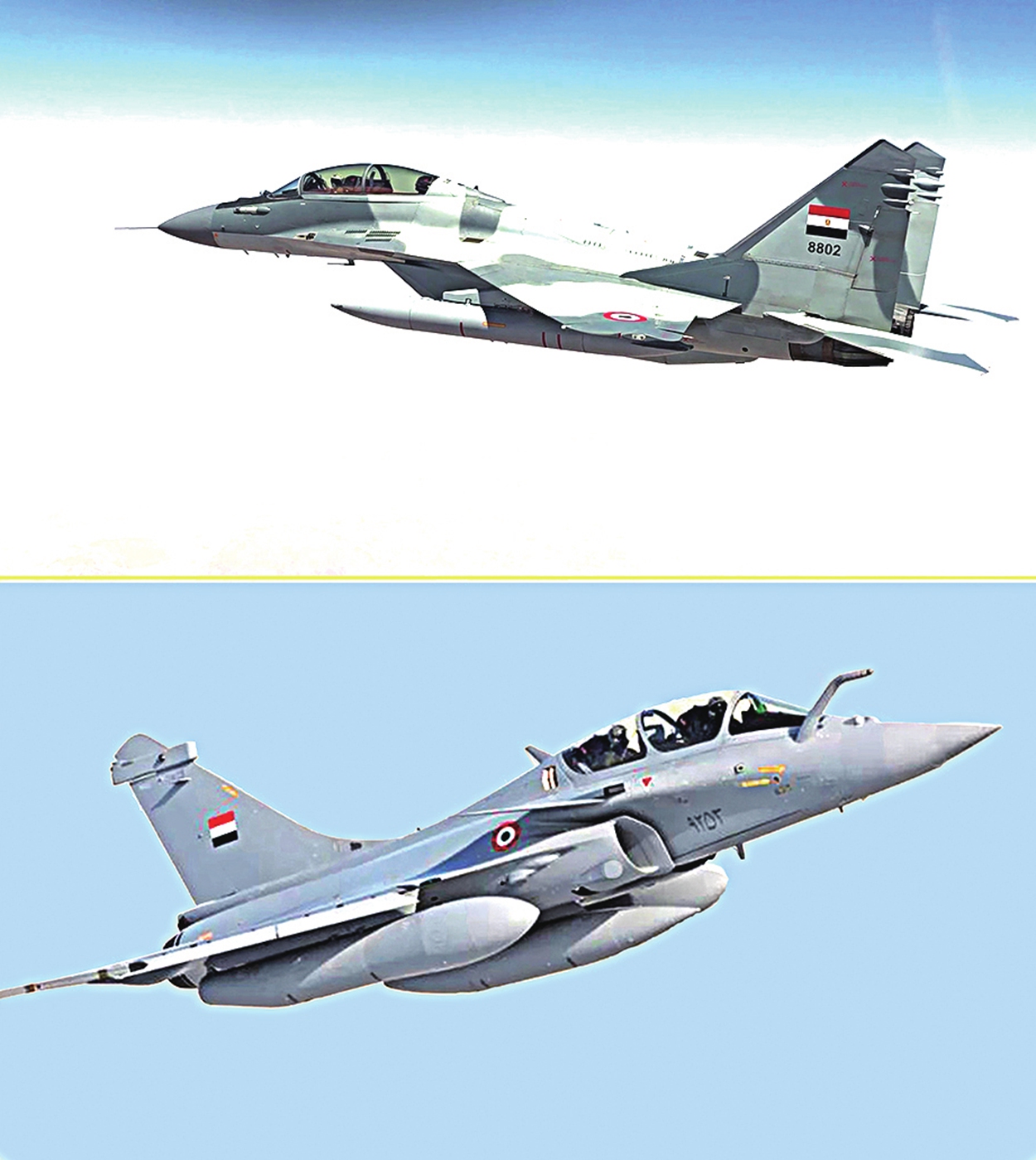
Wang Yanan, editor-in-chief of the Beijing-based Aerospace Knowledge magazine, told the Global Times on Monday that this joint exercise marks the first time China has deployed the J-16 and the first time Egypt's Rafale fighters have participated, a development worth noting. It reflects a relatively high level of mutual trust between the two militaries and a substantial standard of joint training.
Apart from the French military, India and Egypt are some of its main users. This presents a rare opportunity for China to gain familiarity with the Rafale in a joint training setting. As a flagship product of Dassault Aviation, the Rafale represents a major design philosophy of advanced European aerospace equipment, Wang said.
Although the J-16, deployed by China for this long-range training mission in Egypt, evolved from the original Soviet-era platform, it has been completely transformed and now plays a key role within China's aviation system. Capable of carrying a variety of munitions, it can perform electronic warfare, ground strikes and long-range air-to-air combat, making it a highly versatile platform, Wang explained.
Song Zhongping, a Chinese military affairs expert, told the Global Times previously that the J-16 heavy fighter jets' first participation in the China-Egypt joint air force training exercise marks an upgrade from 2025's deployment of medium-sized J-10Cs in the drill, reflecting broader and more advanced overseas training by the PLA Air Force.
The two aircraft belong to the same generation, but the Rafale's overall combat capabilities may not be as comprehensive as those of the J-16, which has been continuously upgraded as part of China's aviation system development, Wang said.
Wang noted that the main objectives are to enhance mutual trust and familiarity with each other's equipment, understanding flight performance, medium- and close-range maneuverability and basic weapon configurations.
Moreover, as the Rafale is also deployed in countries neighboring China, understanding its performance characteristics through joint training holds practical significance for the country, Wang added.
"The Egyptian pilots' rigorous training discipline, close coordination and solid technical skills left a deep impression on us. Through mutual learning and close exchanges during the exercise, we not only strengthened our bonds but also improved our technical and tactical capabilities together. Joint training with foreign forces has provided a valuable platform for our pilots to sharpen their skills," Ning Yiming, a member of a PLA Air Force unit, was quoted by the PLA Air Force as saying.
The opening ceremony of the joint training was held on Friday. Commanders from both sides delivered speeches, reviewing the history of air force exchanges between the two countries and the achievements of the first joint exercise in 2025. They outlined the objectives of this year's training and expressed hopes that participating personnel would seize the opportunity to learn from each other, build mutual trust and carry forward their traditional friendship, PLA Air Force said.
。

B | The cell phones, tablets, and laptops left behind by veterans who died by suicide may offer insight that could help prevent future military suicides, according to a nonprofit dedicated to analyzing the data from the devices.Stop Soldier Suicide collects the technology as part of its initiative, "The Black Box Project," which is named after the black boxes found on planes that help determine the cause of aviation incidents."If we could gather novel data from those that have died by suicide, we might be able to recreate the last year of life," Stop Soldier Suicide CEO Chris Ford told ABC News.Veterans are 57% more at risk for suicide than non-military adults and around 6,000 veterans die by suicide each year, according to the Department of Veterans Affairs."I think we can prevent needless suffering and a ton of loss of life," Ford said.That kind of loss is something David McDaniel, whose son Connor died by suicide at the age of 26, knows all too well.Connor McDaniel joined the Army after high school, and, according to David, he appeared upbeat during his deployment to Afghanistan, where he was assigned to protect local villages from the Taliban."Some of his Army buddies told me that he was making them laugh while they were being shelled in Afghanistan," David McDaniel told ABC News.But it wasn't long after Connor came home that David McDaniel says he sensed a shift in his son's behavior to include "more anger, a lot of frustration, a lot of gloominess."On Sept. 1, 2021, David says his son entered a wooded area with a firearm."I start screaming his name as I'm walking up the field. And just then the police, the sheriff's department shows up and they tell me to come back down," McDaniel said.He followed their direction, but on the car ride home, an officer called him and said Connor was dead after he fired upon sheriff's deputies and the deputies returned fire and killed him.Connor's death was determined to be a suicide. The district attorney's office concluded that the officers' actions were justified.While grappling with his son's death, David McDaniel was immediately drawn to the Black Box Project, which uses forensic software to unlock and comb through service members' devices provided by their loved ones to review their activity in the weeks leading up to their suicides.McDaniel works in the tech field and says if the project can find repeated patterns in online searches, they may be able to help others to prevent suicides.For instance, McDaniel says his son searched for SGLI, Servicemembers' Group Life Insurance, before his death. If a veteran were to make a similar search and look up "suicide" in the future, for example, McDaniel suggests it could trigger an ad for Stop Soldier Suicide to pop up and provide resources in the search results.Ford says the nonprofit uses machine learning, a subfield of artificial intelligence, to analyze texts and notes in order to determine sentiment or emotional tone, such as anger or desperation. He says they can also track phone usage of the deceased veterans to monitor their past sleep cycles and trace their past geo-locations."Machines can go through computations a lot faster than humans, and they can find signals that we often miss," Ford said.Since launching the Black Box Project in April 2020, Stop Soldier Suicide has received over 100 devices, Ford said. So far, he says they're seeing three patterns before most of these suicides: more anger, different sleep patterns, and social isolation.Ford's team includes Ph.D.s in clinical psychology and suicide researchers. A scientific advisory committee helps steer where and what to look for on the devices.The findings are still preliminary, according to the nonprofit, but one goal is to help the organization decide where, when, and how to target their own mental health resources, like adding more hotline staff at certain hours and ensuring calls are picked up overnight.When asked about privacy concerns of collecting data, Ford said it's something they think about daily."We don't resell the data. We don't push it out to others. We use it for our own research purposes so that we can best understand risk and then give those devices back to those families intact," Ford said.Current privacy laws do not carry on past death, meaning the next of kin typically gains new authority.Petra Oxford-Jackson, whose veteran husband Anthony died by suicide, says she gave his phone to the organization with the possibility it could save even one life."I truly believe he would have been okay with it, and it's a hard thing for a survivor to give up something so personal as his cell phone," Oxford-Jackson told ABC News.The Black Box Project received $3 million in funding from the Department of Veterans Affairs earlier this year.If you are struggling with thoughts of suicide or worried about a friend or loved one, call or text the Suicide & Crisis Lifeline at 988 for free, confidential emotional support 24 hours a day, seven days a week.。

C |
Current article:http://www.tibiantasangnenti.buzz/list_37c/2pqf.html
Published on:03:56:35
 Here we go!罗马诺:伊普斯维奇总价2750万签药厂中场帕拉西奥斯
 超800名科技领袖联合呼吁:停止研发超级智能
 【观点】申银万国:保税区库存持续去化,橡胶短期预计偏强
 赫拉芬贝赫:现在重要的是取得结果;可以看到阿诺德有多重要
 我的AI新搭档丨④ AI走进课堂 赋能教学新活力
 缅甸木姐一银行遭枪击 已致3人死亡
- ·李蓓“等风来”
- ·“他们没告诉我啊!”浙江男子新房刚要装修,一看傻眼了!
- ·AMD Radeon VII发布;首款7nm图形卡,Super RTX 2080
- ·名记:若沃特森延续上季水准 骑士引援物超所值
- ·闲鱼仲裁偏袒买家,买家违约跑单,卖家独自承担30%退票手续费
- ·下周XBOX新游戏预告:8月24日至8月28日
- ·勇士95分取胜!此前他们季后赛客场得分不破百已遭遇14连败
- ·厦门真景科技有限公司,霸王条款不退费、不延期
- ·Sansha maritime safety administration issues navigation alert for military drills near Xisha Qundao, entry banned
- ·地铁“职”通车!2026年济南市“泉城夜聘”济南地铁首届招聘夜市要来啦
- ·Canalys: 2022年第三季度全球智能手机出货量下降了9%
- ·四川省人大常委会原委员、经济委员会原主任委员刘中伯因严重违纪违法被开除党籍和公职
- ·Rose Young:配OLED面板的iPad Pro将于2024年上半年推出
- ·抖音商城参与免单活动收到不给返款
- ·秋冬保湿护肤品礼盒去哪个平台买实惠:京东礼享派选购指南
- ·科尔:我们的防守很出色 在客场把一支出色球队限制到只拿85分
- ·“十五五”期间北京门头沟谋划亿元以上项目百余个,“十五五”期间北京门头沟谋划亿元以上项目百余个
- ·央行:8月12日7天期逆回购操作量为零
- ·最高法发布海洋生态环境司法保护典型案例
- ·跳高名将胡麟鹏宣布退役,却被恶意猜测“已经怀孕”“傍上富豪”等,本人发文怒斥!
- ·DC fixed Oct 31 for hearing arguments on the bail application in the money laundering case against Satyendar Jain
- ·杭州这轮雨要下到什么时候?
- ·拒绝2年合同,威少啊威少,本可以不退役的?
- ·【盟·全环境立德树人】铭记历史·珍爱和平
- ·【成长·传承】春龙抬头 “童”趣无限——青岛高新区实验幼儿园开展“二月二,龙抬头”活动
- ·‘G7 Is Irrelevant’: 'Global South' Holds West Responsible For Ukraine Crisis, Says Think-Tank Chief
- ·上半年我国机械工业经济运行总体平稳
- ·《红色沙漠》新更新加入“水面奔跑”机制 玩家可踏水疾行引热议
- ·运输秩序恢复!广铁受暴雨影响的铁路线路正常开行
- ·Chinese firm delivers self‑developed core casting for world's most powerful onshore wind turbine
- ·永泰运在嘉兴成立新公司,注册资本500万
- ·大暑纳福,好运升温!山东福彩“福气节”30万赠票等你来拿!