你是我的姐妹
Takaichi reportedly mulls skipping visit to notorious Yasukuni Shrine on anniversary of WWII surrender; experts see political maneuvering, not historical remorse_我的网站

一 |
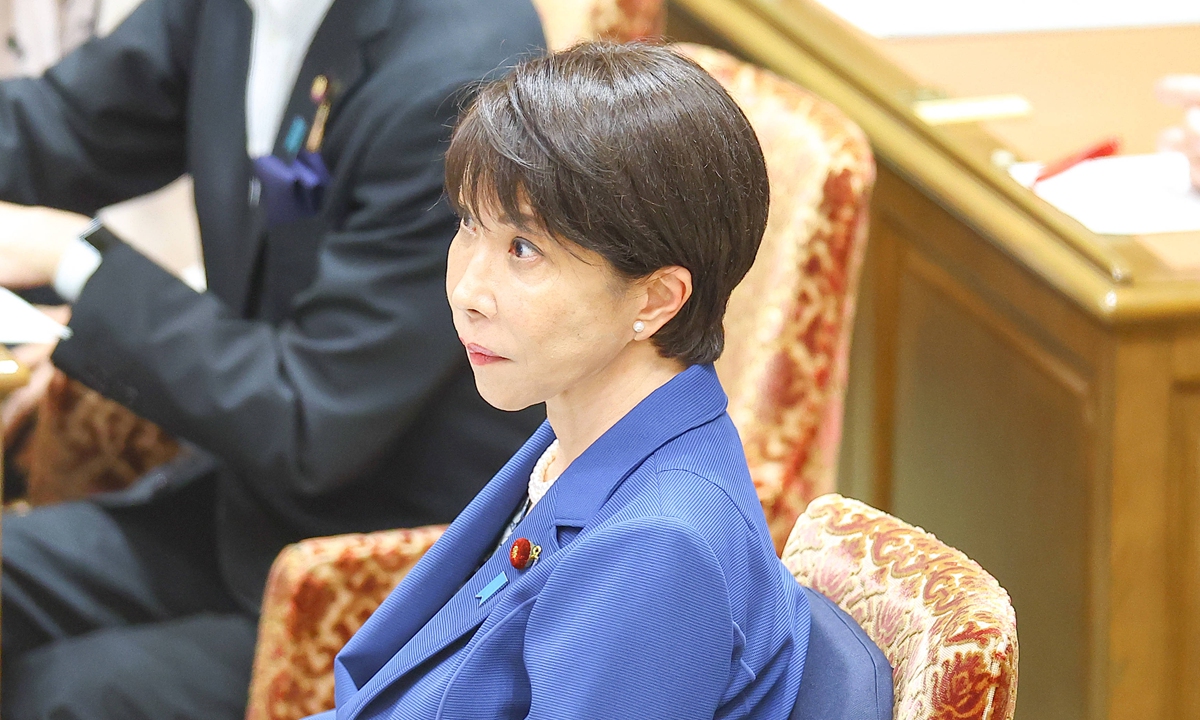
Due to concerns about fueling tension with China and South Korea, Japanese Prime Minister Sanae Takaichi is considering refraining from visiting the notorious Yasukuni Shrine, a symbol of Japanese militarism and wartime aggression, to mark the anniversary of Japan's unconditional surrender in World War II (WWII) on Saturday, Japanese media outlet Kyodo quoted sources familiar with the matter as saying on Wednesday.
Chinese experts said even if Takaichi forgoes a visit to the notorious shrine, the potential decision is merely driven by political calculations and diplomatic maneuvering, and could not be interpreted as a shift in her right-wing stance or as a sign of remorse over Japan's wartime aggression.
Such a visit to the shrine by Takaichi, a conservative known for her hawkish foreign policies, would certainly fuel tensions with China and create a rift in relations with South Korea, two countries that suffered under Japan's wartime military atrocities, Kyodo News reported.
Takaichi regularly visited the shrine before, even while serving as a Cabinet minister. But she has not visited the shrine since becoming leader of the ruling Liberal Democratic Party and prime minister in October, according to Kyodo news.
Chief Cabinet Secretary Minoru Kihara said at a press conference on August 7, when asked about a possible visit by Takaichi to the shrine around the anniversary, that "it is a matter for the prime minister to decide appropriately on her own," according to Japan's Jiji Press.
A source close to Takaichi told the Jiji that, "I don't think the prime minister will visit Yasukuni Shrine. It would complicate relations with South Korea."
Japan's Asahi TV reported that Takaichi may forgo the visit because she believes it is necessary to avoid triggering diplomatic tensions with South Korea, as well as with China.
A visit to the notorious shrine by a sitting Japanese prime minister would be a serious political incident, as it would reflect the leader's attitude toward Japan's wartime aggression and broader historical issues. Even if Takaichi chooses not to visit the shrine, it would not signal a retreat from her right-wing stance or a change in her views of Japan's wartime aggression against other countries, Lü Chao, an expert on Korean Peninsula issues at the Liaoning Academy of Social Sciences, told the Global Times. Rather, he said, the decision would largely reflect political calculations and diplomatic maneuvering.
Lü added that Takaichi could still make other symbolic gestures on the anniversary to cater to Japan's right-wing forces, whose support helped propel her to power. Such a move, he said, would underscore that her views of Japan's wartime history remain unchanged and serve as a reminder to neighboring Asian countries to remain vigilant about Japan's political direction.
Reporting on Takaichi's possible decision to forgo a visit to the shrine, South Korean newspaper Chosun Ilbo said on Wednesday that Takaichi had regularly visited the Yasukuni Shrine. "In the Liberal Democratic Party leadership election held in October last year, Takaichi also said that if appointed prime minister, she would visit the Yasukuni Shrine, noting that such visits should not become a diplomatic issue." However, since then, Takaichi has not visited in person and has only dedicated offerings in a private capacity, per the report.
In April, after Takaichi sent a ritual offering to the notorious Yasukuni Shrine, Chinese foreign ministry spokesperson Guo Jiakun said that China firmly opposes and strongly condemns Japan's latest negative moves related to Yasukuni Shrine and has lodged strong representations and protests with the Japanese side.
The Yasukuni Shrine is a spiritual tool and symbol of Japanese militarists responsible for the war of aggression. It is in fact a shrine for war criminals, noted Guo.
No sitting prime minister has gone to Yasukuni since Japan's late leader Shinzo Abe did so in 2013, drawing strong criticism from neighboring Asian countries.
Beyond Takaichi herself, some Japanese politicians and lawmakers have kept visiting the Yasukuni Shrine, triggering fierce pushback from peace advocates in Japan and the international community, Liu Jiangyong, a professor at the Institute of International Studies of Tsinghua University, told the Global Times, noting that such visits not only reflect the long-standing right-wing stance of Takaichi and other conservative politicians on historical issues, but also lay bare Japan's enduring militarist remnants.
Also in April, members of the conservative solidarity association, a group of conservatives in Japan's Liberal Democratic Party, and 166 Sanseito lawmakers from the Diet and local assemblies visited the Yasukuni war shrine.
In response, Lin Jian, Chinese foreign ministry spokesperson said that China strongly deplores and condemns such acts.
"By visiting the Yasukuni war shrine that honors Japanese Class-A war criminals year after year, these Japanese politicians seek to reverse the just verdict on Japanese aggression, and hereby whitewash Japan's war crimes and revive militarism. The Chinese people and people elsewhere who suffered under Japanese aggression will never accept that, neither will anyone in the world who stand for peace. As Japanese neo-militarism keeps gaining strength, the international community must stay on high alert and stand ready to stamp it out before it could wreak havoc in the region," said Lin.
。 南海这片复杂的海域,仁爱礁成为了中菲关系的一个关键点。随着菲方军舰的补给行动再度展开,马科斯总统提出的“重置”中菲关系更显得引人注目。经过近两个月的补给空窗,仁爱礁的这一波补给不仅仅是一场简单的物资替换,更是两国在海上摩擦中寻求新平衡的一次重要尝试。 在过去的几周里,仁爱礁上的菲军舰经历了一段被称为“断粮”的日子。这不仅意味着几箱食品和饮水的短缺,实际上,它反映出的是菲律宾在这场长期博弈中的战斗力与士气。 该军舰在补给频率下降的情况下,人员健康和舰体老化的双重压力势必会对其驻守能力造成影响。而中方虽然在这一过程中采取了克制,不进行了激烈的拦截,但这并不意味着中国放弃了其在这一争议地区的主权立场。 马科斯提出“重置”中菲关系,也表明他意识到,两国之间的摩擦已经严重影响到菲律宾自身的经济发展和能源安全。数据显示,中国仍然是菲律宾最大的进口来源,占其进口总额的31.7%。 如此庞大的贸易依赖,使得菲律宾无法轻易忽视与中国的关系。因此,面对日益增长的能源压力以及对外部市场的强烈需求,马科斯显然希望通过外交手段,寻找一个新的起点,以便在不放弃主权的前提下实现经济利益的最大化。 但是,值得注意的是,中方对待这次补给行动的方式,既展示了主权的坚持,也体现了人道主义的关怀。中方允许生活物资的运送,却对可能加固军舰的物料保持严格限制。 这种策略不仅有助于维持双方的稳定局面,还能防止菲律宾通过不断的补给来合法化其在仁爱礁的军事存在。

二 | 在这个过程里,“人道”和“主权”并没有被对立,而是以一种新形式进行了一场复杂的博弈。 与此同时,菲律宾当局对于此次补给的态度也逐渐趋于务实。

三 | 马科斯政府强调补给属于其“自我权利”,而中方则表示需提前沟通并接受现场核查,这种务实的交流方式恰恰是两国努力避免进一步误解和冲突的表现。

四 | 历史教训告诉我们,一旦误判发生,可能导致的后果将非常严重。正如前些年中菲在南海频繁碰撞时的窘境,任何小的摩擦都可能被放大为地区安全危机。 美菲同盟关系的增强为菲律宾提供了短期的安全保障,但并未解决根本性的经济和资源问题。

五 | 随着美国在全球范围内的战略调整,菲律宾也须清醒地认识到,单靠外部力量的保护并不能保证未来的安全与繁荣。

六 | 因此,马科斯的“重置”不仅仅是外交辞令的包装,而是基于对现实的深刻理解与思考后做出的理智选择。 但是,马科斯在国内依然面临着来自军方和政界的压力。某些保守派政治人士始终坚持不向任何国家寻求补给许可,他们认为这种做法可能削弱菲律宾在南海的主张。

七 | 因此,马科斯必须在改善对华关系和维护国内政治形象之间找到微妙的平衡。

八 | 每一步都充满着挑战,而每一次漂泊在仁爱礁的补给之旅,都可能成为他政治生涯的一次关键抉择。 中菲关系的走向将取决于两国在南海这个敏感地区如何管理彼此的利益与分歧。如果双方能够接受“有分歧也要维持运转”的现实,或许就能够在继续推动经贸往来的同时,逐步形成适应彼此的海上行为规则。这样的转变,将不仅使仁爱礁避免再次成为冲突的引线,同时也为双方建立起一种更为稳定的互动模式。

九 | 总之,南海局势的变化远比眼前的补给事件更为复杂。

十 | 每一个决策,每一次互动,都会在无形中塑造着中菲关系的未来。从长远来看,只有在相互尊重与合作的基础上,才能够真正实现地区的和平与繁荣。

十一 | 面对日益严峻的国际形势和内部挑战,菲律宾所需要的,不仅是短期的利益,而是一个稳定可持续的国家战略,而这,显然需要在对华关系中找到一条更为务实的路径。返回,查看更多。

十二 |
Current article:http://www.tibiantasangnenti.buzz/list_ozfwq/jwz59.htm
Published on:06:57:19


1
联通营业厅和客服不给改29元绑宽带求办理2
US Pentagon official’s Manila speech exposes alliance fragility, with Philippines likely to bear costs of provocations: Chinese expert3
工业和信息化部再次批复开展卫星物联网业务商用试验4
爆买!“牛散”章建平成为光纤大牛股第三大股东5
西门子能源将分拆工业转型部门,拟保留少数股权6
市委书记连续两天暗访_防控_李睿7
盖茨:人工智能将带来历史上最动荡的时期8
乌军三任总司令对比,谁的兵法谋略最强?真相是全都水土不服,黑洞观星,原创 乌军三任总司令对比,谁的兵法谋略最强?真相是全都水土不服9
蹊跷! 房东慌了: 租客什么东西都没拿, 突然消失10
PGCIL Recruitment 2025: आवेदन आज से स्टार्ट, कुल 1543 पदों पर निकली भर्ती11
消息传来,完全关闭_扎波罗热_运行12
万亿低空经济,迎来大爆发13
美术里的援宁故事14
如何培育国家级零碳工厂和零碳算力设施15
《乌鲁木齐蜘蛛山野房车自驾营地攻略:进疆中转驻车太省心了》
- 随机推荐
1
SKhynix淘宝旗舰店下架所有产品,宣告9月上旬终止经营2
福建开展耕地保护和国土绿化空间专项规划编制工作3
‘제자 성폭행 혐의’ 남경주, 11월 국민참여재판 받는다4
神秘的东方力量,上届斯诺克世锦赛冠亚军首轮均不敌中国选手5
新华网民生观察丨协同共治 保障二手房交易资金安全6
周末机器人传利好 全球首次人机网球对决7
双色球2026080期开机号分析(附历史)8
国家发展改革委发展战略和规划司研究课题征集公告9
Former Trump lawyer Sidney Powell pleads guilty in Georgia election interference case10
市委召开党建工作会议11
Khel Diwas : खेल दिवस पर मुख्यमंत्री योगी आदित्यनाथ ने की घोषणा, सभी मंडल में खुलेंगे स्पोर्ट्स कॉलेज12
库里神仙漂移三分众生相 小桂子瘫倒 老板起立 老板娘比心13
西部黄金:2026年上半年净利润5.47亿元,同比增长315.67%14
中科通达:计提及转回信用和资产减值准备共计1568.98万元15
活塞vs尼克斯G2前瞻:布伦森冲击总分2-0 坎宁安力争终结15连败