
明天我依然爱你
新华社消息|我国成功发射卫星互联网低轨24组卫星_我的网站

A | 记者:陈凯姿 编导:赵宇超 音视频部制作 。
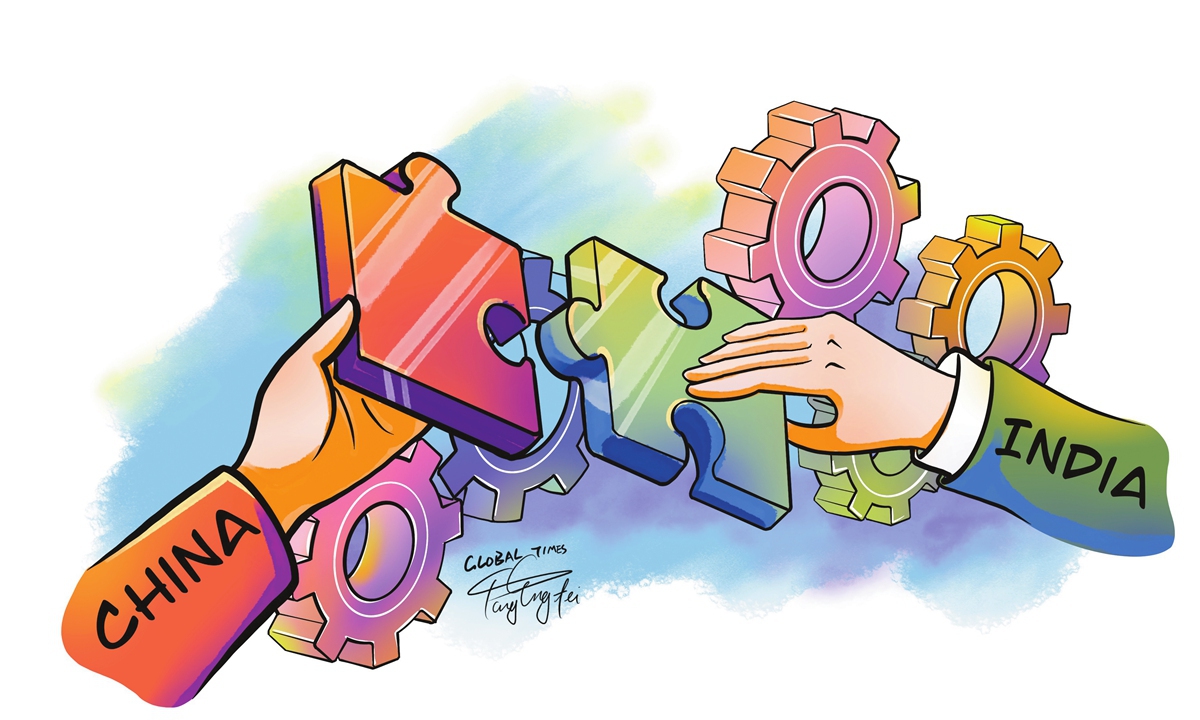
Some Indian media outlets and regional political forces have recently sought to amplify allegations of an unverified China-India border confrontation, while official signals from Beijing and New Delhi have emphasized stability, communication and the importance of managing differences through established mechanisms.
The contrasting narratives have emerged at a moment when exchanges between China and India in various fields have gradually resumed, and cooperation has been advanced in an orderly manner, Chinese experts noted, warning that sensationalizing border-related claims could disrupt the hard-won momentum in bilateral ties and the two countries should prevent the boundary question from hijacking their broader relationship.
Contrasting narratives
The latest media speculation was partly triggered by claims made by the People's Party of the so-called "Arunachal Pradesh" (PPA), a regional Indian political party. According to The Arunachal Times, a local Indian newspaper, a four-member PPA "fact-finding committee" led by former minister and party adviser Kahfa Bengia visited the so-called "Taksing area" (known as Taxin, in Zangnan, Southwest China's Xizang Autonomous Region) on July 10 and subsequently alleged that Indian forces had been prevented from accessing several patrolling points.
The claims were then amplified by Indian news outlet ThePrint, which reported on Tuesday, citing unnamed sources, that Chinese and Indian patrols had allegedly come "face to face" near Taxin in late July.
The outlet further claimed that Chinese personnel subsequently left before returning in early August and setting up "two or three tents."
However, ThePrint acknowledged that sources in India's defense and security establishment said the "situation was well under control."
Some other Indian reports have also questioned the sensational allegations. India Today reported on Wednesday that Indian government sources dismissed social media claims circulating about what was described as "slow encroachment," while noting that similar allegations regarding the area had previously been rejected by local authorities and the Indian Army.
In fact, the claims stand in contrast to the official diplomatic signals coming from both sides.
Asked on Tuesday about reports concerning the border, Indian Ministry of External Affairs spokesperson Randhir Jaiswal said New Delhi takes border matters seriously and reiterated India's position that "the state of the border affairs will reflect on the state of our larger bilateral ties," according to a media briefing released by the ministry on its website on Tuesday.
He also referred to existing mechanisms for dealing with border issues and preventing misunderstanding and miscalculation, according to the briefing.
Responding on Wednesday to questions from Bloomberg and Reuters concerning social media claims about stepped-up Chinese military activity and a possible new border incident, Chinese Foreign Ministry Spokesperson Guo Jiakun said, "The China-India border situation is generally stable at the moment."
"China and India held the 36th meeting of the Working Mechanism for Consultation and Coordination (WMCC) on China-India Border Affairs last week. The two sides agreed to maintain communication via diplomatic and military channels and jointly uphold peace and tranquility in the border areas," Guo said.
Qian Feng, director of the Research Department at Tsinghua University's National Strategy Institute, told the Global Times on Thursday that the fact that the two sides continue to communicate through established channels shows that the border situation has not developed in the direction of escalation portrayed by some Indian media.
Such hype also came amid another development concerning Zangnan. India on August 7 announced what it called "standard" names for 27 locations in so-called "Arunachal Pradesh," a move that some Indian media outlets portrayed as an effort to counter China and further connected with the latest reports of border tensions.
China has firmly rejected the move. Responding to the issue on Monday, spokesperson Guo said, "Zangnan region is China's territory. China does not recognize the so-called 'Arunachal Pradesh' illegally set up by India."
Guo said India's attempt to replace names long used by China with its so-called "standard names" is "illegal, null and void," and stressed that it would not change the fact that Zangnan belongs to China.
Hu Zhiyong, a professor from Zhejiang International Studies University and a research fellow at the Institute of International Relations at the Shanghai Academy of Social Sciences, told the Global Times on Thursday that border and security issues have traditionally been susceptible to political manipulation in India's domestic politics. "When domestic economic and social problems become difficult to address, issues involving the borders with China or Pakistan can easily be pushed to the forefront to divert public attention," Hu explained.
He said economic pressures, concerns over foreign investment and the domestic business environment, together with accumulated public sentiment, could provide incentives for some political forces to magnify external disputes.
Hu argued that another problem lies in the tendency of some Indian political figures to bind the boundary question too closely to the entire China-India relationship. "The boundary issue is one part of bilateral relations, which also encompass political, economic, diplomatic, security and people-to-people exchanges," Hu said. "It should not be allowed to hijack the entire relationship."
Dialogue matters
According to the Chinese Foreign Ministry's statement of the August 6 meeting, the two sides conducted constructive dialogue in a candid and friendly manner, had an in-depth exchange of views on further implementing the consensus reached during the 24th Round of Talks between the Special Representatives of China and India on the Boundary Question, and agreed to jointly prepare for the coming 25th Round of SR talks. The two sides also discussed boundary delimitation, border management, mechanism development, cross-border exchange and cooperation. The two sides agreed to continue to maintain diplomatic and military communication, and jointly safeguard peace and tranquility in the border areas.
Hu pointed out that the timing of the latest speculation is noteworthy, as border issues have at times been used by some forces in India in an attempt to gain leverage ahead of important bilateral interactions.
The 36th WMCC meeting demonstrates that the two sides possess functioning channels through which disagreements can be addressed. This is particularly important as China and India seek to sustain the improvement in relations and prepare for further high-level interactions, said Chinese observers.
"The boundary dispute is a complicated issue left over from history and cannot be resolved overnight," Qian said. "What matters is to keep diplomatic and military communication channels open, promptly handle frontline frictions through established mechanisms, expand people-to-people exchanges and strengthen coordination under multilateral frameworks such as BRICS and the SCO."
。
Current article:http://www.tibiantasangnenti.buzz/xd4gbvv/i5hoxkn.ppt
Published on:19:22:15
我的网站相关阅读
我的网站最新文章
- 世界田联宣布巴黎奥运会部分赛事增加一轮比赛
- 上半年中国数字产业收入超20万亿元 同比增13.6%,上半年中国数字产业收入超20万亿元 同比增13.6%
- 国家海洋预报台发布海浪橙色警报和风暴潮蓝色警报:上海近岸海域将出现2.5到3.5米的大浪,浙江近岸海域将出现3到5米的大浪到巨浪
- 奥克兰北岸绑架案:危险男子仍在社区流窜,公众请警惕!
- US Jury Finds Ex-CIA Employee Guilty for Massive Theft of Information - WikiLeaks
- 巨人网络:上半年净利21.44亿元增176%,拟拿出超七成利润分红
- Chris Hansen 透露为何没看罗伯特·帕丁森的《Primetime》
- 章建平大举加仓!6倍牛股业绩猛增
- 西蒙斯:76人最想得到我 他们最认可我的赛场价值
- 太空圈地,中美万颗卫星竞速中的确定性机
- 保育保健||预防甲流,守护健康——预防甲流知识宣传
- Georgia Arrest Strips ‘Special Status’ From Trump
- 广东开展森林消防“以水灭火”实战拉练
我的网站随机推荐
- “钼”成300层+NAND必选项 机构:沉积设备迎10亿美元增量市场
- 凌晨,新疆哈密突发地震
- Oklahoma attorney general sues to stop US's first public religious school
- 看走眼了!1.25亿垃圾!7800万离队!掘金想什么?
- 国台办点名感谢的台湾女孩,做了什么?
- 中国车企欧洲建厂生产150万辆汽车!经济学家泼冷水 欧洲可能沦为组装地
- 激情鲁超燃动河口 东营体彩以赛为媒传递公益与责任
- “十五五”期间,中国运行的核电机组数量将跃居世界首位
- US says it found health and safety violations at GM plant in Ohio
- 业界报告称中国信托行业呈加速增长态势,业界报告称中国信托行业呈加速增长态势
- 超节点、超集群、TPU方案涌现 算力“拼系统”时代产业最关心Token性价比|WAIC观察
- 拼多多直通车优化技巧
- 부산항서 급유 중 기름 해상 유출…긴급 방제